The Surface Is a Lie
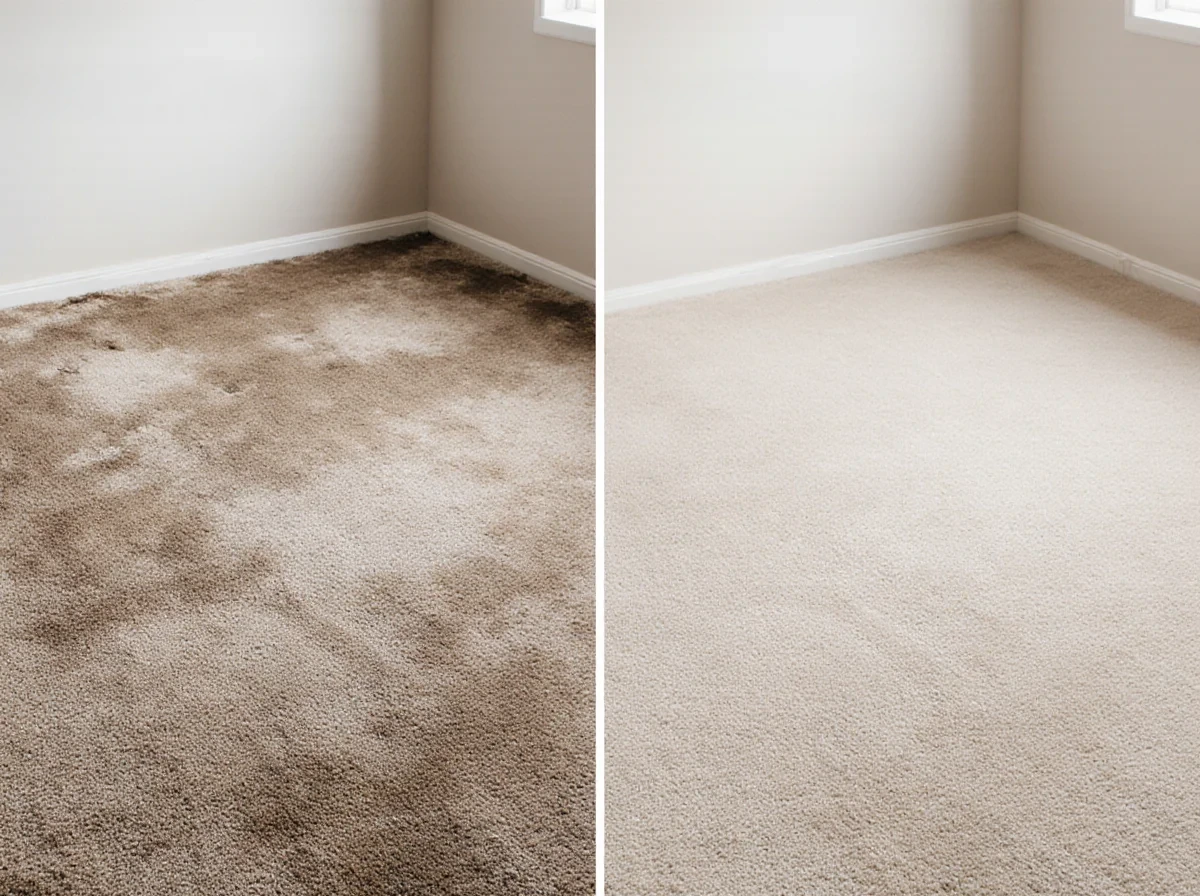
Your vacuum cleaner is a liar. Not on purpose, not maliciously, but it lies all the same. It lies by showing you that satisfying cylinder of hair and dust bunnies and crumbs, by letting you hear the little pieces rattling up the hose, by giving you the sense that you have cleaned something. You have cleaned the surface. The top ten percent. The part you can see.
Below that surface, in the place where carpet fibres meet backing, where padding meets subfloor, there is an entire ecosystem you never see. It does not care about your vacuum. It is too small, too embedded, too alive to be bothered by suction alone. Understanding what actually lives down there is the first step to understanding why your carpet needs more than regular vacuuming to be truly clean.
The Dust Mite Civilization
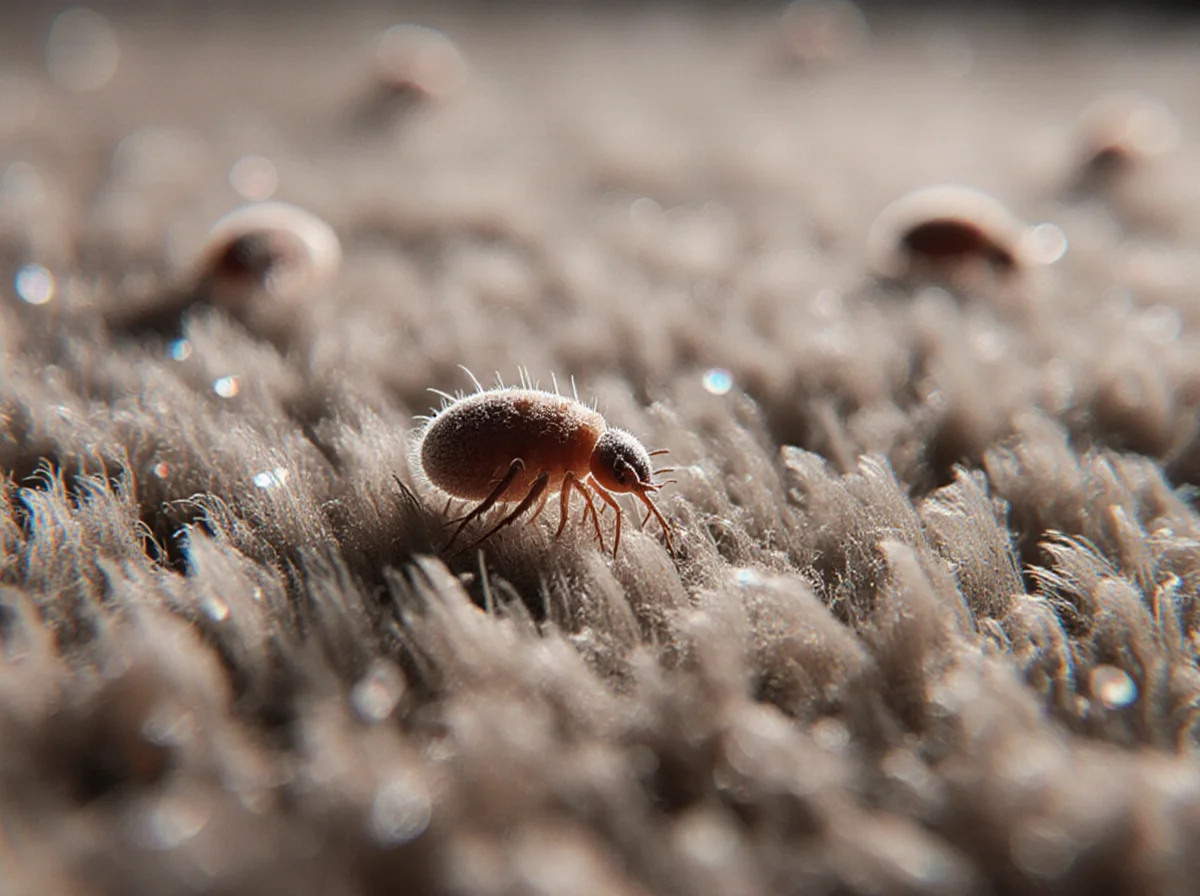
Let us start with the celebrities of carpet biology: dust mites. These microscopic arachnids are everywhere there are soft surfaces and humidity, which means they are absolutely thriving in Fraser Valley homes. The EPA classifies dust mites as a major biological pollutant in indoor environments. A single square meter of carpet can host thousands of them. Not hundreds. Thousands.
Dust mites do not bite. They do not sting. They simply live, eat, and defecate in your carpet. Their food is dead human skin cells, which you shed at a rate of about a gram per day. Your carpet is basically an all-you-can-eat buffet that never closes. The mites come, they feast, they reproduce, and they leave behind something that causes allergic reactions in a significant portion of the population.
Here is what makes dust mites particularly relevant to British Columbia: they love humidity. Not wetness, but the consistent moderate humidity that defines our winters. When the air gets dry, dust mite populations crash. When humidity stays above fifty percent, they thrive. Our climate is basically a dust mite retirement community.
Vacuuming removes some dust mites, but not enough. The ones deep in the carpet fibres, the ones protected by the dense weave, they stay put. Worse, vacuuming can actually aerosolize dust mite feces, sending allergenic particles into the air you breathe. The vacuum bag or canister might look full, but the population in your carpet remains largely unchanged.
Mold Spores and Moisture Memory
Your carpet remembers every time it got wet. That spilled coffee you blotted up. The time the dog came in from the rain and shook off before you could stop him. The humidity that settles into everything during a Fraser Valley winter. Carpet fibres hold moisture, and where moisture lingers, mold follows.
Mold spores are everywhere. They float in through open windows, ride in on shoes, hitchhike on pet fur. Under normal dry conditions, they just sit there dormant. But add moisture, even a little bit, and they wake up. They send out threads called hyphae that dig into organic material. In carpet, that means the fibres themselves, the skin cells and hair that have collected, the tiny bits of food that escaped the vacuum.
The mold you can see, the dark spots on a wet basement carpet, that is the tip of the iceberg. Long before visible mold appears, invisible colonies are establishing themselves. They release volatile organic compounds that your nose detects as that musty smell. Health Canada warns that indoor mold exposure can cause respiratory symptoms even in otherwise healthy people. They release spores that trigger allergic reactions and respiratory issues. And once they are established, they are incredibly difficult to remove without professional intervention.
Vacuuming does almost nothing to mold. The spores are too small, too sticky, too deeply embedded. You need heat and moisture extraction to actually kill mold and remove the structures it builds. Regular vacuuming, no matter how powerful the machine, simply cannot deliver that.
Pet Dander: The Protein That Penetrates
If you have pets, you already know about hair. It is on your clothes, in your food, floating in sunbeams. But hair is not the real problem when it comes to allergies. The real problem is dander: tiny flecks of skin that pets shed just like humans do. These flecks are smaller than hair, lighter than hair, and they behave very differently.
Pet dander does not just sit on top of carpet. It has a static charge that makes it cling to fibres. It is small enough to work its way deep into the carpet backing, past where vacuum bristles can reach. It has a protein structure that triggers allergic reactions in sensitive people, and that protein does not break down quickly. Pet dander can remain allergenic for months or even years after it is shed.
Here is the thing about vacuuming and pet dander: the suction pulls up the hair you can see, but it often misses the dander you cannot. And because dander is so light, the airflow from a vacuum can actually redistribute it, pushing it deeper into the carpet or kicking it up into the air. You end up with a carpet that looks cleaner but is still saturated with allergenic proteins.
For people with pet allergies, this is a significant issue. The carpet becomes a reservoir of dander that releases particles into the air with every footstep. You can vacuum daily and still have high levels of airborne allergens because the source, the deep reservoir in your carpet, remains untouched.
The Bacteria From Outside
Your shoes are filthy. This is not a judgment, it is a statement of biological fact. Studies have found that the bottoms of shoes carry bacteria from everywhere you walk. Public bathrooms. Sidewalks where dogs have relieved themselves. Parking lots with leaked automotive fluids. Grass treated with pesticides. All of it sticks to your soles and comes home with you.
Some of the bacteria that has been identified on shoe soles includes E. coli, Klebsiella pneumoniae, and Serratia ficaria. These are not benign passengers. They are pathogens that can cause illness. When you walk across your carpet with outdoor shoes, you are depositing a biological sample of everywhere you have been.
The Fraser Valley adds its own specific contributions. Agricultural areas mean soil bacteria. Wildlife means additional pathogens from animal waste. Wet weather means mud that carries everything it touched. Your carpet becomes a collection point for the microbiome of the entire region.
Vacuuming removes some of this bacterial load, but not nearly enough. The bacteria adhere to carpet fibres. They colonize. They form biofilms, which are protective layers that make them even harder to remove. Your vacuum might pick up the visible dirt, but the invisible bacterial passengers remain.
VOCs and Chemical Trapping
Carpet does not just accumulate biological contaminants. It also traps chemical ones. Volatile organic compounds, or VOCs, come from cleaning products, air fresheners, paint, new furniture, and outdoor pollution. They are the reason new carpets have that smell, why your house smells like cleaner for hours after you use it, why air fresheners seem to linger.
The problem is that carpet fibres are excellent at adsorbing VOCs. The compounds stick to the surface of the fibres and stay there. Over time, they can off-gas back into your home, contributing to indoor air quality issues. Some VOCs have been linked to health effects ranging from headaches to more serious conditions with long-term exposure.
Vacuuming does nothing for VOCs. You cannot suck up molecules that are adhered to fibre surfaces. You need a process that actually breaks that adhesion and removes the trapped compounds. Without it, your carpet becomes a slow-release source of the chemicals you have been using to clean it.
Why Hot Water Extraction Works
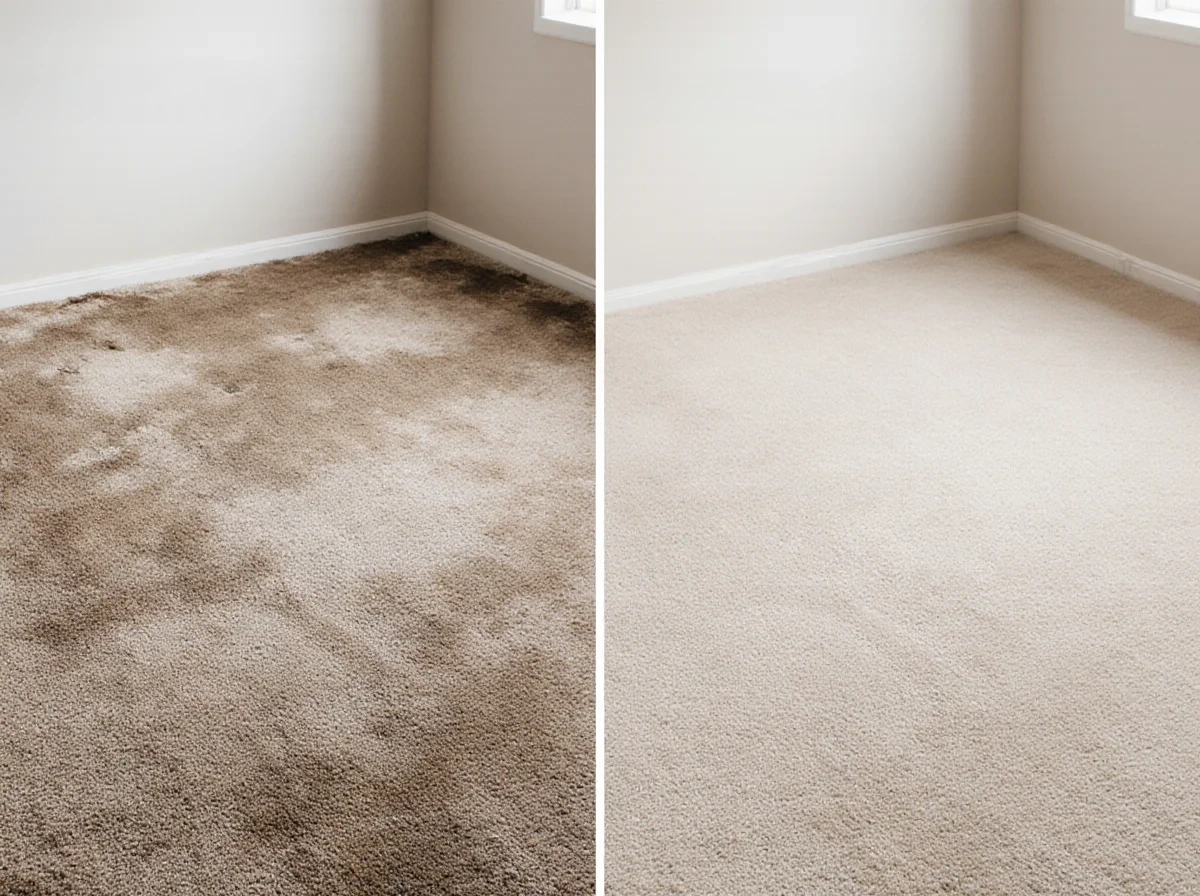
This is where professional hot water extraction becomes essential. Unlike vacuuming, which only addresses surface debris, hot water extraction works on multiple levels. The heated water penetrates deep into carpet fibres, reaching the places where dust mites live, where mold establishes, where pet dander settles. The heat itself kills dust mites and mold spores. The high-pressure spray breaks up biofilms and dislodges adhered particles. The powerful suction then removes the water and everything it has dissolved or dislodged.
The difference is extraction versus surface cleaning. Vacuuming is surface cleaning. It takes what is loose and visible. Hot water extraction takes what is embedded and invisible. It addresses the biology that vacuuming cannot touch.
For Fraser Valley homes, this matters more than in drier climates. Our humidity supports dust mite populations. Our wet weather tracks in moisture that feeds mold. Our agricultural environment brings in bacteria that other regions do not deal with. The carpet biology here is uniquely active, and it requires an equally active response.
The Health Connection
If someone in your home has allergies, asthma, or respiratory sensitivity, this is not abstract biology. It is daily life. The dust mite feces triggering morning congestion. The mold spores causing headaches. The pet dander making eyes water. These are real symptoms caused by real organisms living in your carpet.
Regular professional deep cleaning of carpets and upholstery is not a luxury in these situations. It is a medical intervention. It reduces the allergen load in your home. It removes the triggers that make people miserable. It creates an environment where breathing is easier.
Even for healthy people, there is value in not sharing your home with thousands of dust mites and their waste products. There is value in walking barefoot on carpet that is actually clean, not just visually clean. There is value in knowing that your floor is not a reservoir of bacteria from every public bathroom you walked past last week.
Your Next Step
Vacuuming is maintenance. It is necessary, it helps, but it is not sufficient. To actually address what lives in your carpet, you need periodic deep cleaning. For most homes in the Fraser Valley, that means professional hot water extraction at least once a year. For homes with pets, allergies, or high traffic, more often.
David Jones and Valley Fresh Carpet Cleaning understand the specific biology of Fraser Valley carpets because they clean them every day. They see what comes out. They know what vacuuming leaves behind. If you have never had your carpets professionally extracted, or if it has been more than a year, it is time. Check pricing for your area and schedule a cleaning that actually reaches the living things you cannot see.