The Memory of White
You remember when it was white. Maybe it was a soft cream, a light grey, or that bright porcelain white that looked so clean against the tile. When it was new, your grout was a color. Now it is a concept. A theoretical state that exists only in memory and in the corners of the room where no one walks.
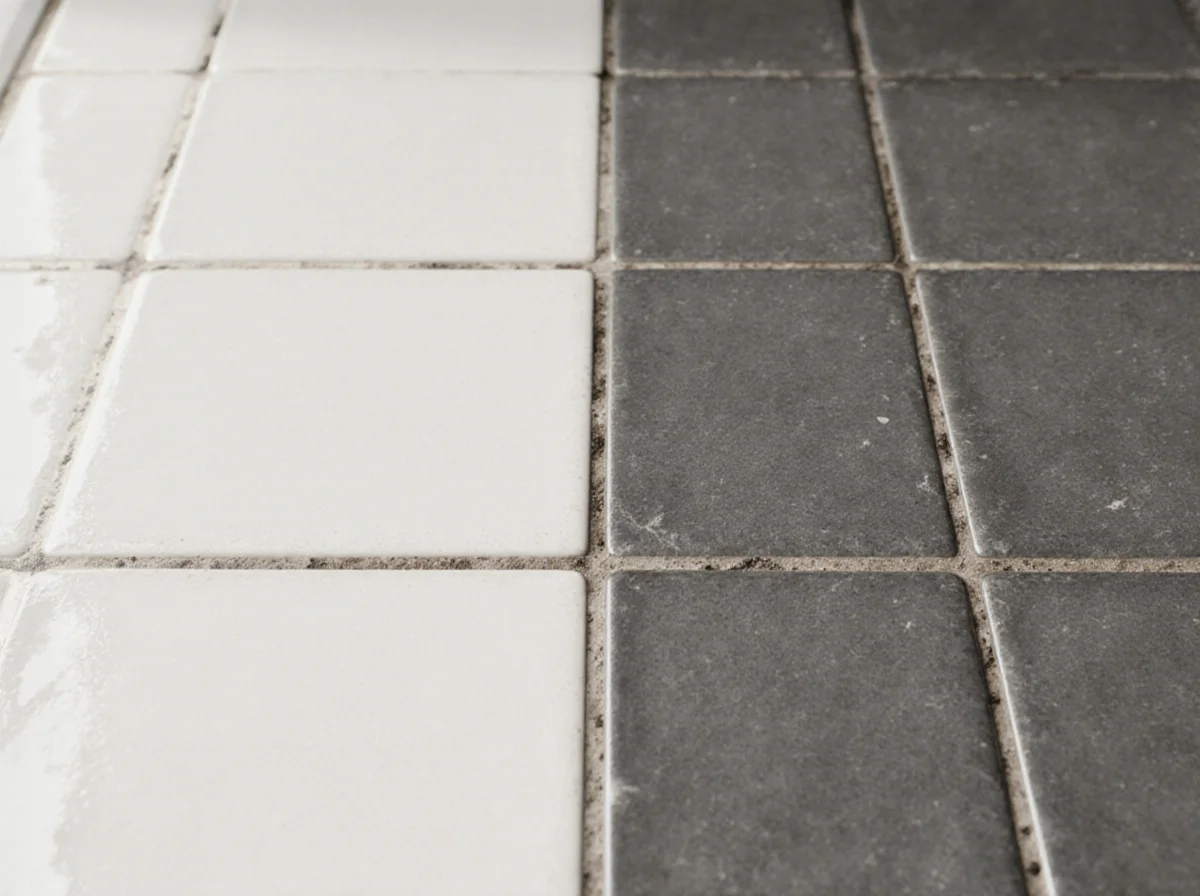
The rest has settled into something else. A grey that is not quite uniform. Patches that look darker near the stove, lighter near the window, mysteriously brown in the bathroom. You have scrubbed it. You have tried the Pinterest solutions, the baking soda pastes, the vinegar sprays, the stiff brushes that left your hands aching. It looks better for a day, maybe two. Then the grey returns.
Here is the truth that no one wants to tell you: your grout is not dirty. Not in the way you think. The grey-brown color that has taken over is not a layer of grime waiting to be cleaned off. It is grout that has become something else entirely.
Why Grout Is a Sponge
To understand what happened to your grout, you need to understand what grout actually is. Cement-based grout is porous. Not slightly porous, not a little bit absorbent, but genuinely sponge-like at the microscopic level. Those tiny holes and channels are not defects. They are the nature of the material.
Every liquid that touches your grout has a choice: bead up and roll off, or find a hole and get into. Water makes this choice constantly. Soapy water from mopping. Spilled juice. Pet accidents. The dampness that accumulates in bathroom grout after a hot shower. In a Fraser Valley winter, when humidity stays high and things dry slowly, water has all the time it needs to penetrate.
Once inside, the water does not travel alone. It carries dissolved substances with it. Soap scum from your cleaning products. Minerals from hard water. Tiny particles of dirt and food. Organic matter from skin cells and pet dander. All of it gets deposited inside the grout’s pores as the water slowly evaporates.
This is why your grout looks grey. It is grey. The material itself has become saturated with accumulated residue. You are not looking at dirty grout. You are looking at grout that has chemically and physically absorbed years of everything that has touched your floor.
The Biofilm Problem
There is another layer to this, and it is biological. The moisture, warmth, and organic material trapped in grout pores create perfect conditions for microbial growth. Bacteria colonize the surface. Mold spores germinate in the damp channels. They do not just sit there: they form biofilms.
Biofilm is a protective matrix that microorganisms create around themselves. It is slimy, persistent, and nearly impossible to remove with normal cleaning. Think of it as a city that bacteria build to protect themselves. Once established, it keeps growing, incorporating new arrivals, creating a living layer that contributes to the discoloration you see.
In bathrooms, kitchen floors, and entryways, biofilm is almost certainly part of what makes your grout look the way it does. It is not just stain anymore. It is alive. And like most living things, it resists being scrubbed away, as recommended by the Tile Council of North America maintenance.
What Scrubbing Actually Does
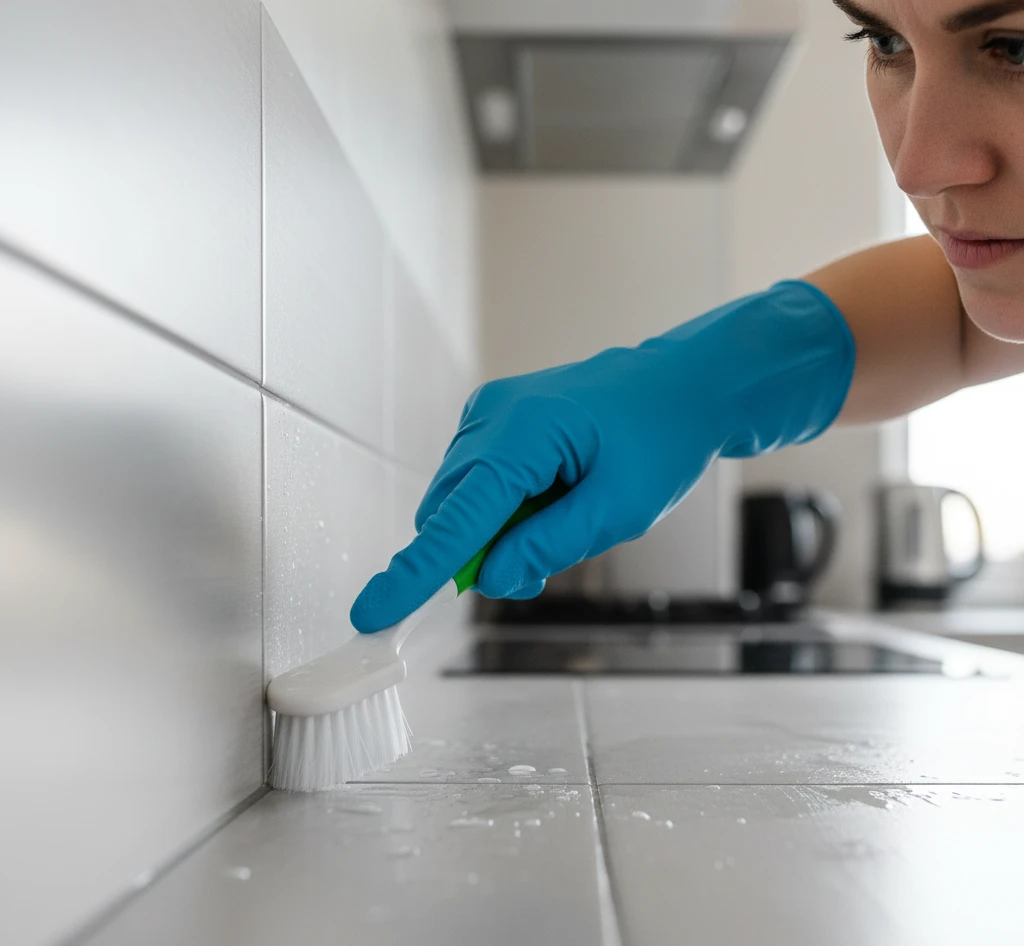
When you get down on your hands and knees with a brush and cleaning solution, you are working on the surface only. The bristles might reach slightly into the grout lines, but they cannot penetrate the pores where the real problem lives. You are cleaning the very top layer while leaving everything below untouched.
This is why the results never last. The surface looks better because you removed loose dirt and disrupted some of the biofilm. But the pores remain full. The accumulated residue is still there. As soon as moisture returns, the biofilm regrows. The discolored grout reappears. You have treated the symptom, not the disease.
Some DIY methods actually make the problem worse. Acidic cleaners like vinegar can etch the grout surface, creating even more pores for moisture to enter. Bleach kills surface mold but does not remove the roots or the staining. Scrubbing too hard can erode the grout, making it more porous than before. Good intentions, unintended consequences.
Where This Matters Most
Not all grout faces the same challenges. In the Fraser Valley, certain rooms are particularly vulnerable because of how we live and what the climate does.
Kitchen floors see constant traffic, food spills, and the moisture that comes with cooking. The grout near the stove absorbs grease that settles out of the air. The area near the sink deals with splashing water and dropped food. By the refrigerator, condensation creates damp conditions that never quite dry. Kitchen grout works hard and shows it.
Bathrooms are their own special case. Shower grout is almost always darkened because it never fully dries between uses. The humidity in a Fraser Valley bathroom during winter can stay high enough to keep grout damp for days. Mold loves these conditions. Even with exhaust fans, bathroom grout faces a constant battle against moisture.
Entryways track in everything from outside. Rain, mud, road salt in winter, pollen in spring. The grout at your front door is a record of every season, written in discoloration. Entryways also see the most foot traffic, which grinds dirt into the surface and drives it deeper.
What Professional Cleaning Actually Does
This is where professional tile and grout cleaning becomes necessary. The equipment used by companies like Valley Fresh Carpet Cleaning operates on entirely different principles than household scrubbing.
Rotovac rotary technology is the key. Instead of scrubbing in one direction with a brush, rotary systems use high-speed rotating heads that clean in multiple directions simultaneously. The pressure is consistent and high enough to penetrate grout pores. The extraction is powerful enough to pull dissolved material back out instead of just pushing it around.
The cleaning solutions used are formulated for this specific purpose. They break down biofilm, dissolve mineral deposits, and emulsify grease in ways that household cleaners cannot. They penetrate, react, and then get thoroughly extracted so nothing is left behind to attract new dirt, as recommended by the IICRC hard surface cleaning.
Heat matters too. Hot water or steam helps break the bonds between the grout and the contaminants inside it. Heat expands the pores slightly, allowing deeper penetration. It kills mold and bacteria that cold water leaves untouched. The combination of heat, pressure, chemistry, and extraction is what makes professional cleaning effective where DIY fails.
What to Expect: Reality Check
Here is what you need to understand: professional cleaning can do remarkable things, but it cannot perform miracles. If your grout has been absorbing contaminants for ten years, one cleaning session will not return it to the color it was when installed. It will be dramatically better. It might be dramatically different. But it may not be perfect.
Grout that has been neglected for years, especially in bathrooms with chronic moisture issues, may have permanent staining. The biofilm might be too established. The mineral deposits too deep. In these cases, professional cleaning improves the situation noticeably but cannot fully restore the original color.
Sometimes, the honest recommendation is grout replacement. If the material is too degraded, too deeply stained, or too compromised by years of moisture damage, cleaning reaches limits. New grout gives you a fresh start. It is more expensive than cleaning, but for some floors, it is the only path back to the color you remember.
A good technician will tell you which category your grout falls into before starting work. They will set realistic expectations. They will recommend cleaning if it will help, replacement if it will not, and let you make an informed decision.
Maintenance After Cleaning
If you do get your grout professionally cleaned, or if you start with new grout, maintenance becomes the priority. Sealing is the single most important step. A quality grout sealer fills the pores, creating a barrier that keeps moisture and contaminants out. It does not make grout maintenance-free, but it buys you time. Spills bead up instead of soaking in. Regular mopping actually works because the dirt stays on the surface.
How often you need professional cleaning depends on the room and your lifestyle. Kitchen floors in busy households might need annual attention. Bathrooms with good ventilation might go two years. Entryways in rainy climates like ours are wildcards: some need frequent cleaning, others hold up surprisingly well.
The Fraser Valley Grout Reality
Living in the Fraser Valley means dealing with specific challenges. Our wet seasons are long. Our humidity is high. We track in mud, we deal with snow melt, we live with moisture that drier regions do not face. Our grout works harder here, and it shows.
This is why local expertise matters. A cleaning company that understands how Fraser Valley weather affects tile and grout will approach the job differently than someone from a dry climate. They know where the moisture hides. They know what the biofilm looks like when it has been growing in our specific conditions. They have cleaned enough local floors to know what works here.
Your Move
If you are looking at your grout right now and seeing grey where you remember white, you have options. You can keep scrubbing, accepting temporary improvements and gradual decline. You can research grout replacement and the cost of starting over. Or you can call Valley Fresh Carpet Cleaning and find out what professional cleaning can actually do for your specific situation.
David Jones and his team work on tile and grout throughout Chilliwack, Abbotsford, and the Fraser Valley. They have seen grout in every state of discoloration. They know what responds to cleaning and what needs replacement. They will give you an honest assessment and do the work if it can help.
Your grout may never be exactly what it was when new. But it can be better than it is now. Sometimes noticeably better. The only way to know is to ask.